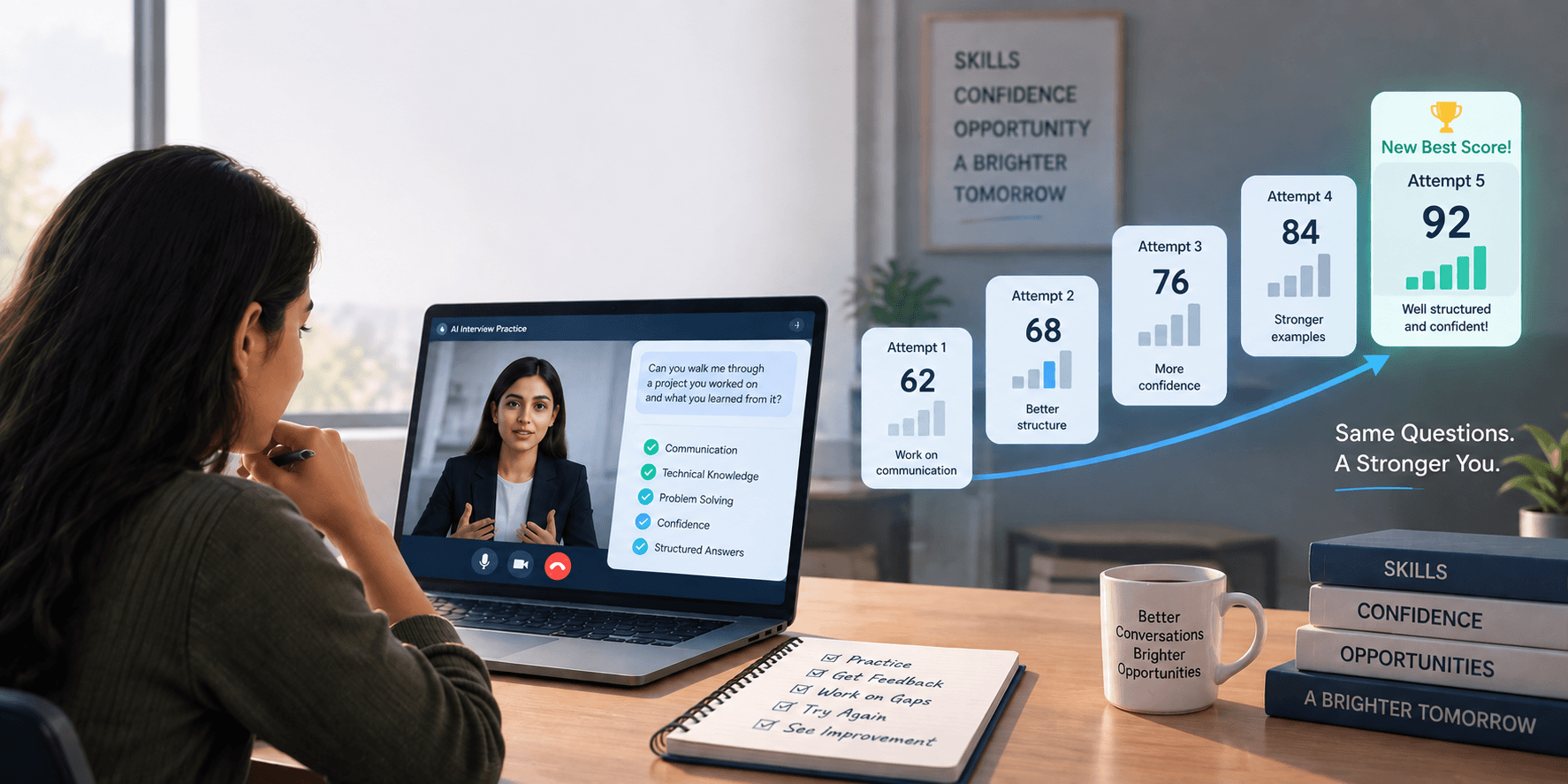

AI in Recruitment Is Much More Than Resume Screening
When business leaders hear the words "AI in recruitment," many still think about one thing: resume screening. But AI can now participate in much more of the recruitment and assessment process, including candidate interactions, interviews, coding assessments, structured evaluations, and assessment proctoring.
That creates an important knowledge gap.
Recruiters and talent acquisition professionals who work with recruitment technology every day are generally familiar with these capabilities. But business leaders, functional heads, and other executives who approve technology investments may still have a much narrower understanding of what AI can actually do in recruitment.
And that matters.
Because the people making decisions about recruitment technology should understand what the technology is capable of before deciding how much of it their organization actually needs.
"AI in recruitment is no longer just about finding resumes that match a job description. It is about expanding the capacity of candidate assessment."
The Outdated Mental Model of AI Recruitment
When many people hear "AI recruitment," they immediately think about resume screening.
AI reads a resume.
AI compares it against a job description.
AI identifies candidates who appear to match.
That is certainly one application of AI in recruitment. But it is no longer the full picture.
AI can now participate in multiple stages of candidate assessment.
It can interact with candidates, conduct structured interviews, evaluate responses against defined criteria, conduct coding assessments, generate structured candidate evaluations, and help monitor the integrity of remote assessments.
The opportunity is therefore much bigger than automating resume screening.
The real opportunity is to rethink how much of the candidate assessment process can happen before scarce human interview time is required.
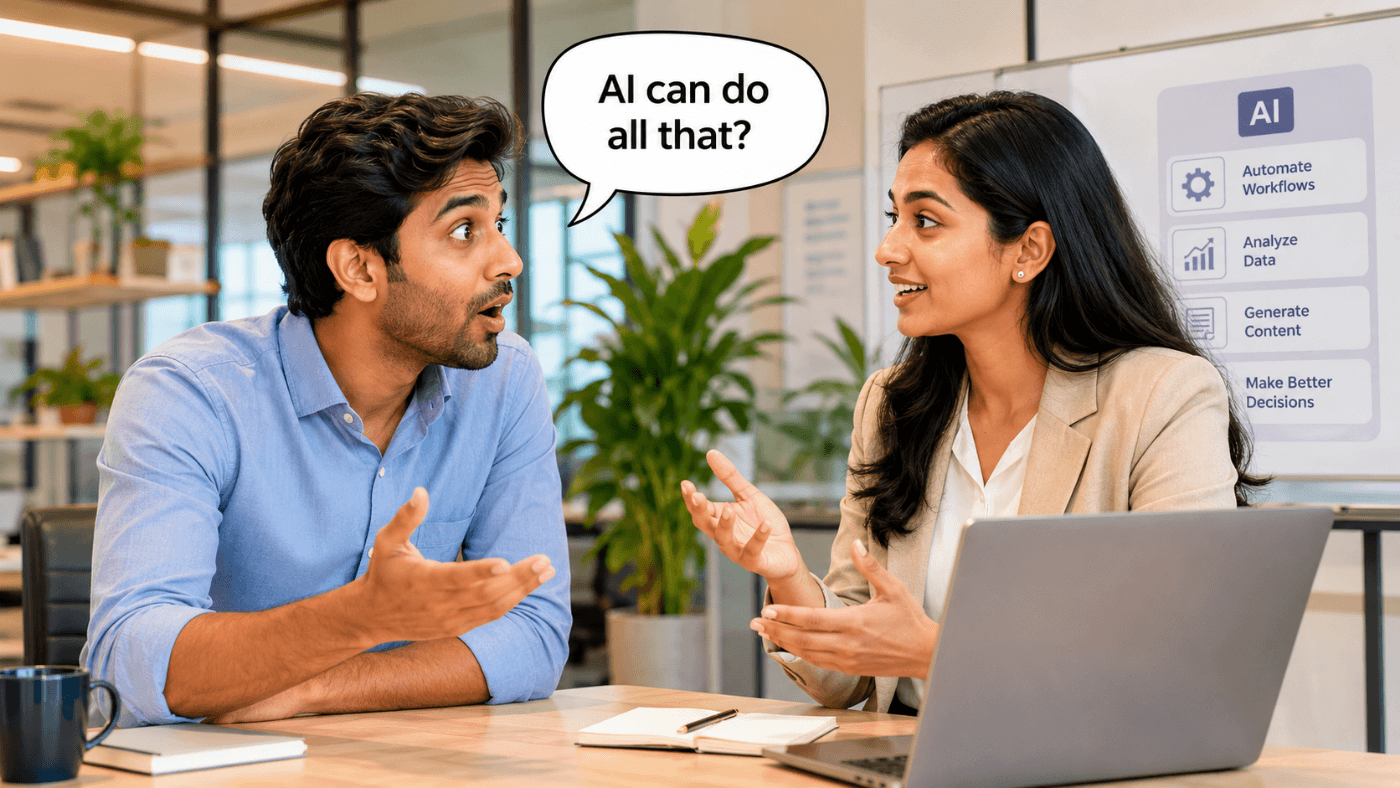
AI Can Conduct Interviews
One of the biggest misconceptions about AI recruitment is that AI can only process information that already exists in a candidate's resume.
That is no longer the case.
AI can conduct candidate interviews and structured screening interactions.
Instead of simply asking whether a candidate's resume contains the right keywords, an AI interviewer can interact directly with the candidate, ask questions, evaluate responses, and generate a structured assessment.
This changes what organizations can do with a large candidate pool.
Instead of making an early decision based primarily on a resume, organizations can gather additional information about candidates before deciding who should move forward to deeper human evaluation.
That distinction is particularly important when hundreds of people apply for the same role.
AI Can Assess Technical Skills Too
The same principle applies to technical recruitment.
Coding assessments can be conducted and evaluated with AI, allowing organizations to assess technical capability without requiring a human interviewer to manually conduct every initial technical round.
This is especially valuable for roles where technical skills are a critical part of the hiring decision.
A resume may indicate that someone has experience with a particular programming language or technology.
A structured assessment can provide additional evidence about what the candidate can actually do.
And AI makes it possible to conduct that assessment at a scale that would be difficult to achieve if every candidate required a human evaluator from the beginning.
"The question is no longer whether AI can screen candidates. The question is how much candidate assessment AI can support before human judgment is required."
The Scale Advantage Humans Cannot Match
Consider an organization that receives 500 applications for a position.
With a traditional process, it may not be practical to interview hundreds of candidates. The organization might narrow the pool to 20 or 30 candidates at the resume stage and interview those candidates.
That immediately creates a limitation.
The organization is not necessarily evaluating the best possible pool of candidates. It is evaluating the pool that its recruitment process has enough capacity to handle.
AI changes that equation.
An organization could potentially use AI to assess 100, 150, or even more candidates before selecting a smaller group for deeper human evaluation.
That means the organization can gather more information before making the shortlist.
AI does not get tired.
It does not become numb after conducting five interviews in a row. It can continue conducting structured assessments at scale.
Humans have finite attention. AI can extend the amount of assessment that happens before that scarce human attention is required.
AI Reduces Decision Fatigue
There is an important distinction between replacing human judgment and reducing the amount of repetitive judgment humans are required to perform.
Suppose a hiring team needs to assess 50 candidates.
Instead of asking humans to conduct all 50 initial interviews, AI can conduct the first structured assessment and help narrow the group to a smaller number of candidates.
The human interviewer might then spend their time with seven or eight candidates who have already demonstrated enough evidence to warrant deeper evaluation.
This changes the quality of the human interview.
The interviewer has more time.
There is less repetition.
There is less decision fatigue.
And there is more opportunity to explore the nuances that matter when evaluating a candidate.
AI is therefore not necessarily removing humans from the hiring process.
It is changing where human attention is spent.
"AI handles scale. Humans handle depth."
Consistency Is a Major Advantage
Speed gets much of the attention when organizations discuss AI in recruitment.
But consistency is just as important.
Human interviewers are individuals. They have different experiences, preferences, expectations, communication styles, and first impressions.
A candidate can sometimes make a strong or weak first impression for reasons that have little to do with their ability to perform the job.
Once that impression is formed, it can influence how the rest of the interview is perceived.
There is another challenge in larger organizations: multiple interviewers may be involved in evaluating candidates.
Different interviewers can ask different questions, emphasize different characteristics, and interpret similar answers differently.
That creates variability in the assessment experience.
An AI-led assessment can instead follow a defined assessment framework and apply the same process and criteria to candidates.
This consistency matters.
It means candidates are not necessarily being assessed differently simply because they happened to be interviewed by different people.
AI does not bring the same kind of personal first impressions that a human interviewer can bring into an interview.
And when an assessment framework is applied consistently, candidates can be evaluated against the same expectations.
That can help reduce certain forms of subjective variability in hiring.
AI Can Help Protect Assessment Integrity
There is another capability that many business leaders may not immediately associate with AI recruitment: live proctoring.
Consider a coding assessment or online interview.
A candidate could potentially have another browser tab open with an AI tool that generates answers to the questions being asked. They could switch between tabs during an assessment or consult another device.
Traditional remote assessments can make these behaviors difficult to identify consistently.
AI-powered proctoring can detect signals such as tab switching, unusual activity, or indications that the candidate is looking away from the assessment environment.
This can help organizations identify situations that may require attention and protect the integrity of remote assessments.
Importantly, a detected signal should not automatically be treated as definitive proof of misconduct. Context and appropriate review still matter.
But the capability itself is significant.
AI is not only helping organizations assess what candidates know. It can also help organizations monitor whether the assessment environment itself is trustworthy.
More Candidates Can Be Assessed Before Human Evaluation
When these capabilities are combined, the impact becomes more significant.
Resume screening can identify potential matches.
AI interactions can gather additional information.
AI interviews can assess candidates against defined criteria.
Coding assessments can evaluate technical skills.
Proctoring can help protect assessment integrity.
Structured evaluations can organize the resulting information.
Then human interviewers can spend their time on a smaller group of candidates who have already gone through a more substantial assessment process.
This creates a different recruitment model.
Instead of:
500 applicants → resume screening → 20–30 interviews → hiring decision
An organization can potentially move toward:
500 applicants → AI screening → 100+ AI assessments/interviews → 7–8 deeper human evaluations → hiring decision
The exact numbers will vary by role and organization.
The principle is what matters.
AI can allow organizations to assess a broader candidate pool before consuming significant human interview time.
AI Recruitment Is About More Than Efficiency
For executives, the value of these capabilities is not limited to automation.
It can mean faster hiring because assessment does not depend entirely on human availability.
It can mean greater scale because more candidates can be assessed without requiring a proportional increase in interviewer hours.
It can mean lower administrative workload because recruiters and hiring teams spend less time coordinating and conducting repetitive assessments.
It can mean greater consistency because candidates can move through a standardized assessment process.
And it can mean better human evaluation because interviewers have more time to focus on the candidates who have already demonstrated potential.
There is also an important fairness dimension.
If humans have to manually assess every candidate, organizations naturally limit the number of candidates they can realistically evaluate.
AI can increase the size of the candidate pool that receives meaningful assessment.
That creates an opportunity to avoid eliminating candidates simply because the organization does not have the capacity to evaluate them.
The Executive Question Should Change
For business leaders deciding whether to invest in AI recruitment technology, the question should not simply be:
"Can AI screen resumes?"
That is already a relatively small part of what AI-powered recruitment can do.
The better questions are:
- How many candidates can we realistically assess today?
- How many could we assess if repetitive assessment tasks were supported by AI?
- How much interviewer time could be redirected toward deeper candidate evaluation?
- How consistently are candidates being assessed across different interviewers?
- How much useful talent are we currently excluding because our recruitment process cannot scale?
- And how can we protect the integrity of remote assessments as more recruitment moves online?
These are business questions, not merely technology questions.
The Future of Recruitment Is Not AI Versus Humans
The conversation around AI recruitment is often framed as a choice.
AI or humans.
Automation or human judgment.
Technology or personal interaction.
That is the wrong way to look at it.
The more useful model is complementary.
AI can handle high-volume, structured assessment work at a scale that humans cannot practically match.
Humans can then spend their time on deeper evaluation, nuance, and the decisions that require organizational judgment.
The result is not necessarily fewer humans in recruitment.
It is a recruitment process in which human attention is used more deliberately.
"AI doesn't make human judgment less important. It makes human judgment more valuable by giving humans fewer, better-informed candidates to spend their time on."
AI Recruitment Has Already Moved Beyond the Resume
Many organizations are still thinking about AI recruitment through an outdated lens.
They see a tool that reads resumes, matches keywords, and creates a shortlist.
But the technology has moved further.
- AI can interact with candidates.
- It can conduct interviews.
- It can assess coding skills.
- It can generate structured evaluations.
- It can help monitor assessment integrity.
And it can do these things at a scale that would be difficult for human teams to achieve alone.
For organizations thinking about the future of recruitment, that changes the conversation.
The question is no longer whether AI can help recruiters screen resumes.
The question is how much of the recruitment assessment process can be supported by AI—and how much more effectively humans can make hiring decisions when their time is spent where it matters most.